Cárcel de la Corona Dungeons in Lavapiés: the Hidden Cells beneath Madrid’s Antón Martín Senior Centre
Updated on
In the centre of Madrid, beneath a building that hundreds of people pass every day without suspecting what lies below, are a series of small, claustrophobic dungeons traditionally associated with the former Cárcel de la Corona, or Ecclesiastical Prison. They are located in the basement of today’s Antón Martín Municipal Senior Centre, in Lavapiés, and form one of the least-known and most surprising historic corners of central Madrid.
Where are the dungeons located?
The dungeons are in the basement of the Antón Martín Municipal Senior Centre, at 14 Calle de la Cabeza, in the Lavapiés neighbourhood, within Madrid’s Centro district.
The nearest metro stations are Tirso de Molina and Antón Martín, both on Line 1, making it very easy to include the visit in a walking route around Lavapiés, Plaza de Tirso de Molina or the Antón Martín area.
What was the Cárcel de la Corona?
During the Ancien Régime, different prisons existed depending on the jurisdiction to which a detainee belonged. The so-called Cárcel de la Corona, or Ecclesiastical Prison, was intended mainly for members of the clergy who fell under ecclesiastical jurisdiction.
The prison operated in this part of Calle de la Cabeza at least during the final years of the 18th century and the first decades of the 19th. It should not be directly confused with the prisons of the Spanish Inquisition in Madrid, although some modern publications have used the two concepts interchangeably.
Are these really the original dungeons?
There is some historical debate on this point. Traditionally, the five small cells that can be seen beneath the present-day senior centre have been identified as surviving remains of the former Cárcel de la Corona.
However, research based on historical documentation places the original prison building slightly further along the street, approximately at what is now number 16 Calle de la Cabeza. According to this interpretation, the dungeons preserved beneath number 14 may have been altered or recreated during later works on the building.
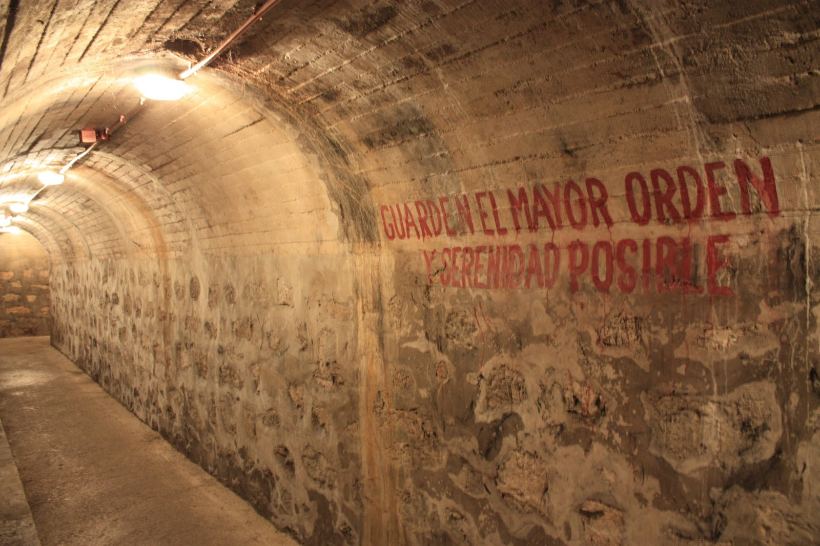
In any case, the underground complex retains the appearance of old prison spaces and gives a vivid sense of the extremely harsh conditions in which a person could have been confined more than two centuries ago.
What can we see inside?
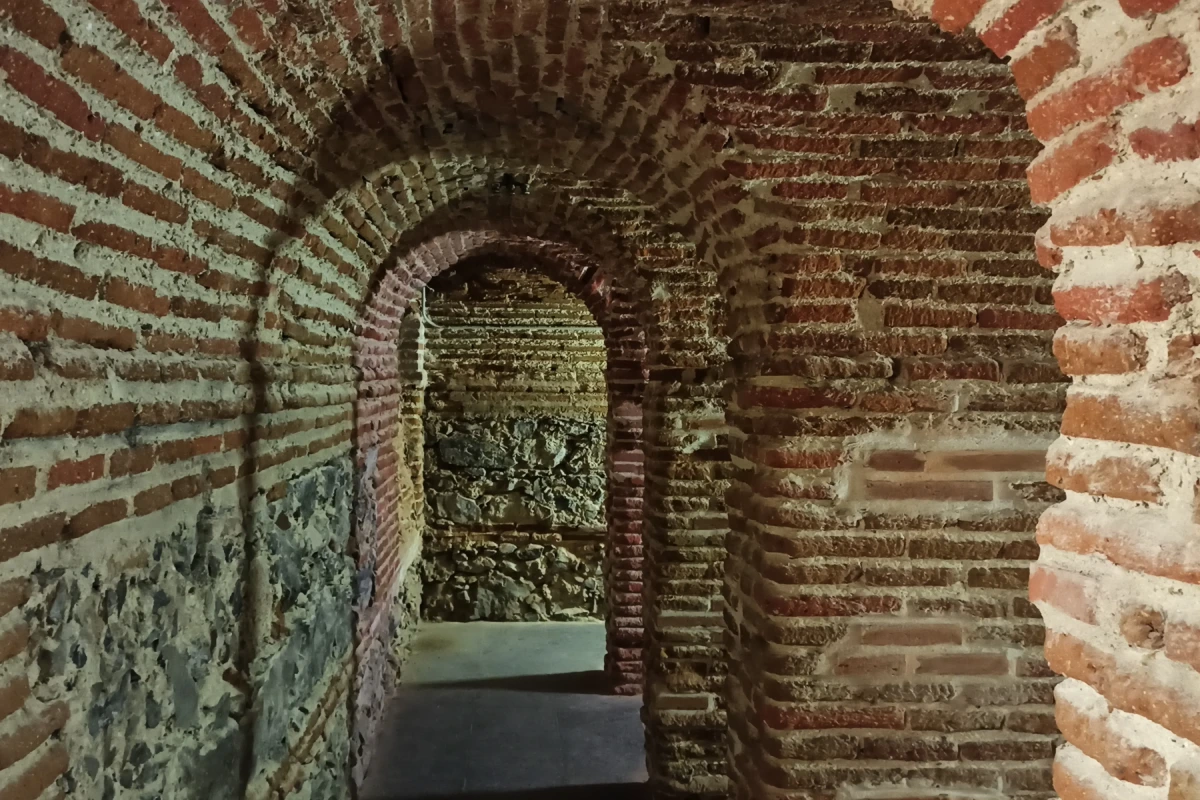
- Five small cells, arranged along a narrow underground space.
- Brick and flint walls, materials commonly used in Madrid’s historic architecture.
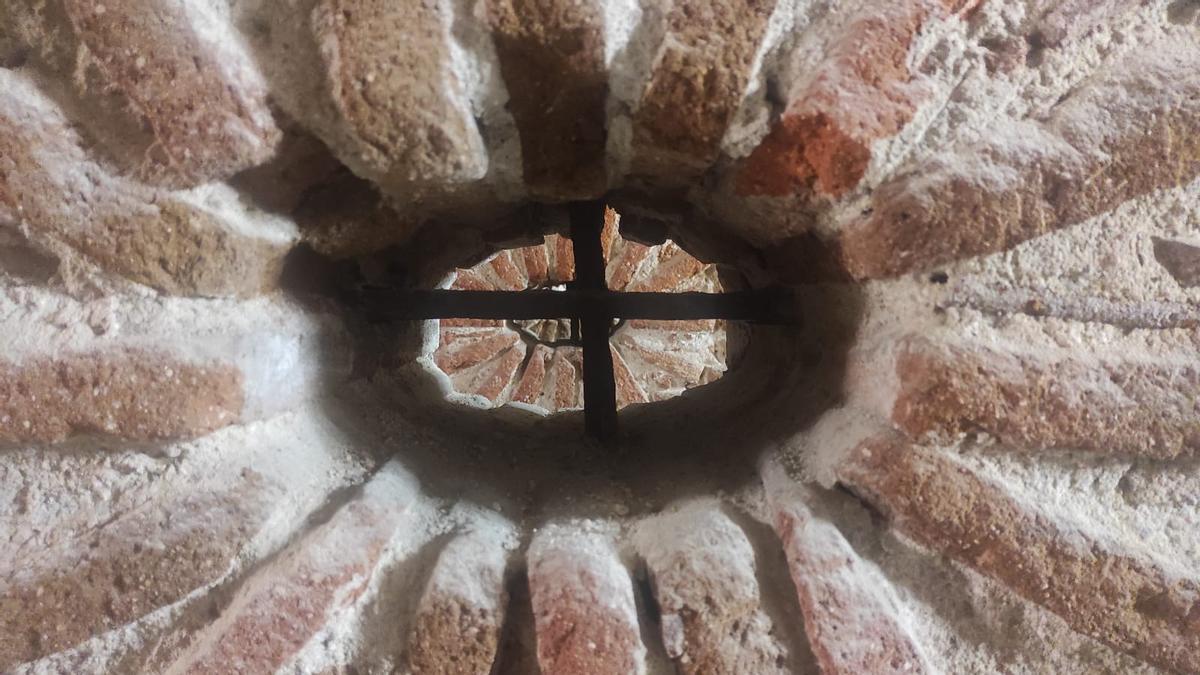
- Small openings between the cells, some protected by metal bars or cross-shaped grilles.
- Ventilation openings at street level, which connected the underground spaces with the outside and allowed a minimal amount of air and light to enter.
- Narrow stairways leading down from the present-day facilities of the centre to the dungeon area.
The cells are very small and the space is deliberately uncomfortable. It is enough to imagine them without electric lighting, with very little ventilation and almost completely cut off from the outside world to understand the conditions in which prisoners once had to remain.
What happened here to the Cura de Tamajón?
One of the best-known episodes connected with the Cárcel de la Corona took place in 1821, during Spain’s Liberal Triennium. The priest Matías Vinuesa, known as the Cura de Tamajón and a former chaplain to Ferdinand VII, was accused of taking part in a conspiracy aimed at restoring absolutism.
After being sentenced to prison, a crowd broke into the jail and violently killed him. The episode became one of the darkest and best-known events in Madrid’s political history in the early 19th century.
How can the dungeons be visited?
What makes this place unusual is that it does not operate as a conventional museum. The dungeons are inside an active municipal senior centre.
Visits that have been allowed in recent years usually consist simply of entering the building and asking at reception whether it is possible to go down and see the old dungeons. Visitors are normally asked to provide their details before being allowed access to the basement.
There is no dedicated ticket office or permanent tourist route. As this is a municipal centre whose main function is not tourism, access may depend on the activities taking place at the time. It is therefore advisable to check with the centre in advance if you are travelling there specifically to see the dungeons.
How much does the visit cost?
There is currently no paid tourist ticket required to access the dungeons. Visits permitted by the senior centre are made without purchasing an admission ticket, although access is always subject to the normal operation of the building and authorisation from the staff responsible.
What are the opening hours?
The Antón Martín Municipal Senior Centre is open Monday to Friday from 9:00 to 20:00, and on weekends and public holidays from 11:00 to 20:00. It is closed on certain days over the Christmas period.
These are the opening hours of the municipal centre itself and should not necessarily be understood as guaranteed visiting hours for the dungeons. If the main purpose of your trip is to see them, it is advisable to confirm beforehand that access to the basement is available.
Is it worth visiting?
Yes, especially for anyone who enjoys discovering Madrid’s lesser-known side. This is not a major monument, nor is it a visit that requires much time. That is precisely part of its appeal: entering an apparently ordinary municipal building and discovering, a few metres below street level, five small cells that recall a much darker Madrid.
It is also one of those places that allows you to see the city from a completely different perspective. As pedestrians walk along Calle de la Cabeza, just a few centimetres above the small ventilation openings, it is difficult to imagine that this underground space exists beneath their feet.
What else can we see nearby?
- Lavapiés, one of Madrid’s most historic, lively and multicultural neighbourhoods, full of narrow streets, traditional corralas and small shops.
- Plaza de Tirso de Molina, just a few minutes away on foot.
- Mercado de Antón Martín, a traditional market that has also become an interesting gastronomic destination.
- Filmoteca Española - Cine Doré, one of Madrid’s most beautiful and recognisable historic cinema buildings.
- La Corrala de Sombrerete, one of the best examples of Madrid’s traditional corralas.
- Museo Nacional Centro de Arte Reina Sofía, located a short walk away towards Atocha.
In short, the dungeons beneath the Antón Martín Senior Centre are one of those hidden places that prove Madrid still conceals small fragments of its history beneath seemingly ordinary buildings. Five cells, narrow ventilation openings and a dark prison past turn this brief visit into a fascinating glimpse of underground Madrid and of an age when being confined here must have been an experience almost impossible to imagine from the city we know today.