Arganzuela Greenhouse in Madrid: the Secret Crystal Palace of Madrid Río with Tropical and Desert Plants
Updated on
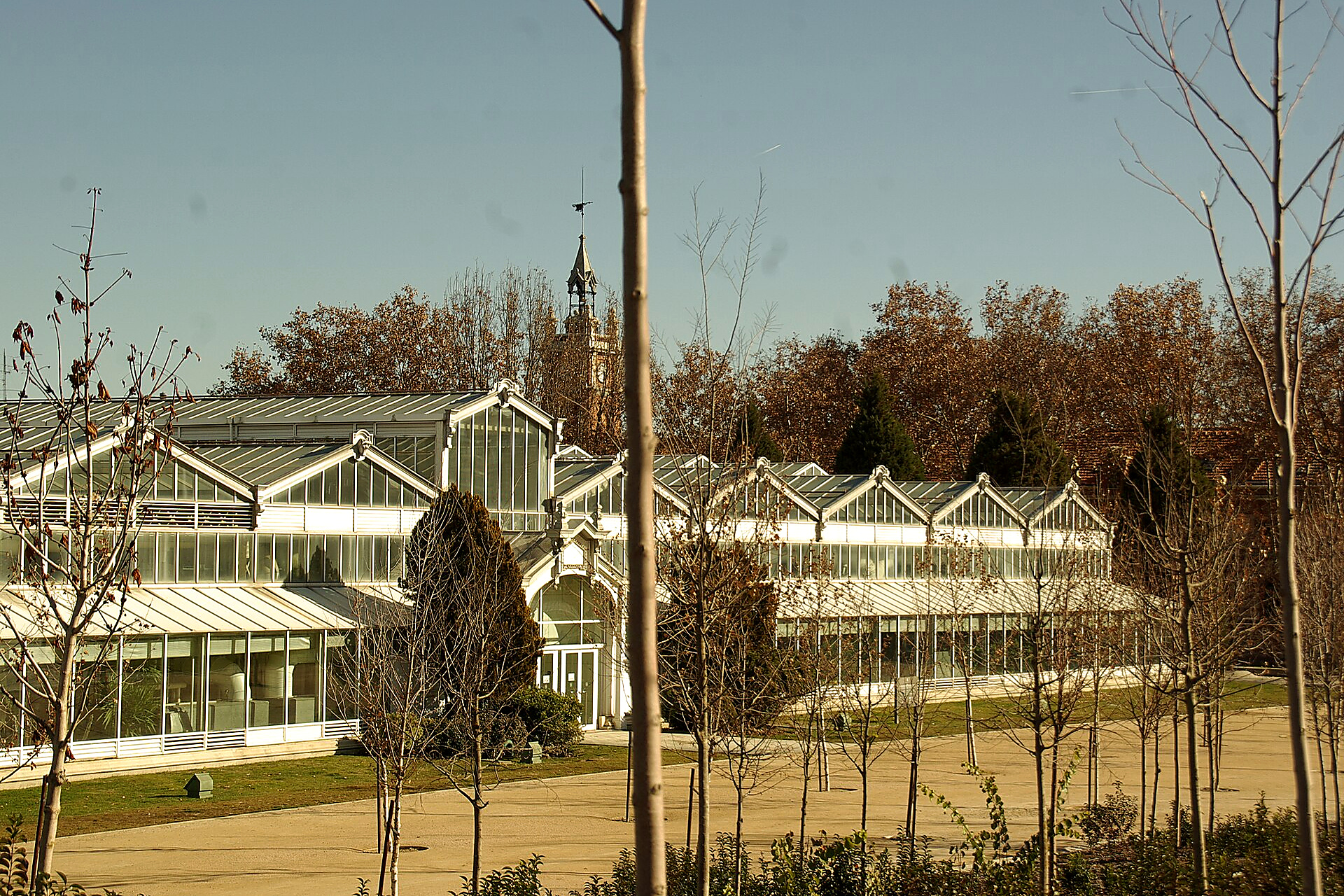
Madrid has a Crystal Palace that is far less well known than the famous one in El Retiro Park. Located next to Madrid Río, behind its vast glass façades lies a surprising botanical garden filled with tropical, subtropical and desert vegetation. This is the Arganzuela Crystal Palace Greenhouse, a huge space of more than 7,000 square metres where, in just a few minutes, you can move from a lush humid forest to a landscape full of cacti and succulent plants.
Where is the Arganzuela Greenhouse?
The Arganzuela Crystal Palace is located at Paseo de la Chopera, 10, next to Madrid Río and very close to Matadero Madrid. The nearest metro station is Legazpi, served by lines 3 and 6.
Its location makes it easy to combine the visit with a walk through Madrid Río, Matadero Madrid or some of the bridges and gardens along the Manzanares River.
Why is there another Crystal Palace in Madrid?
Although today it looks as if it had been built specifically as a gigantic botanical garden, the building originally had a very different purpose. It formed part of Madrid’s historic Municipal Slaughterhouse and Livestock Market and was used as a storage facility for vegetables intended, among other uses, to feed the animals.
For years it was popularly known as the “Potato Warehouse”, due to the importance of this product among the foodstuffs stored inside.
In 1992, the building was restored and converted into the greenhouse we can visit today. During the renovation, much of its metal structure was preserved and the original roof was replaced with glass, taking inspiration from the great European greenhouses and the so-called architecture of iron.
What makes its architecture special?
The building is one of the most interesting surviving examples of industrial architecture in this part of Madrid. Its large metal framework, pitched roofs and vast glazed surfaces create a very bright space reminiscent of the great European greenhouses of the 19th century.
The complex covers approximately 7,100 square metres. Inside, there is a large cross-shaped central area and four separate zones designed to maintain different temperatures and levels of humidity.
Can we really travel through different parts of the world?
In a way, yes, although it would not be accurate to say that it represents four continents. The greenhouse is divided into four botanical spaces reproducing three major climate types: two tropical areas, one subtropical area and one desert area.
The change from one room to another is striking. In a matter of seconds, you can leave a humid space covered in vegetation and enter a much drier environment dominated by cacti and plants capable of surviving with very little water.
What can we see during the visit?
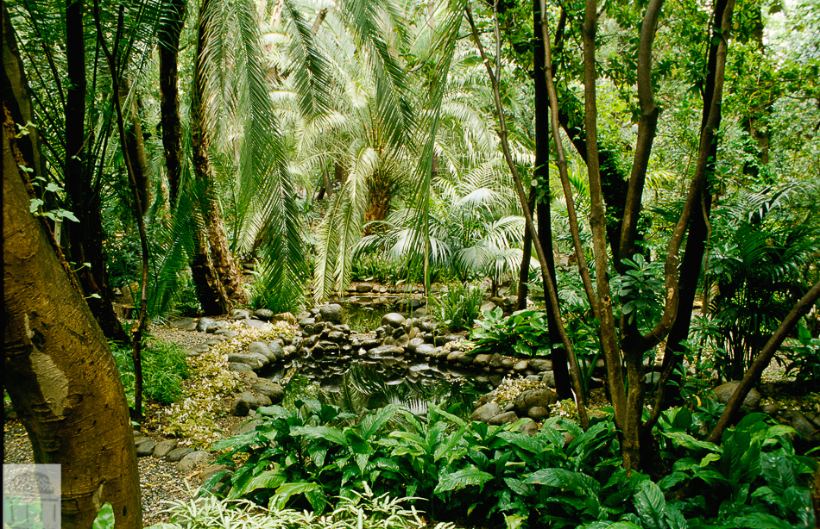
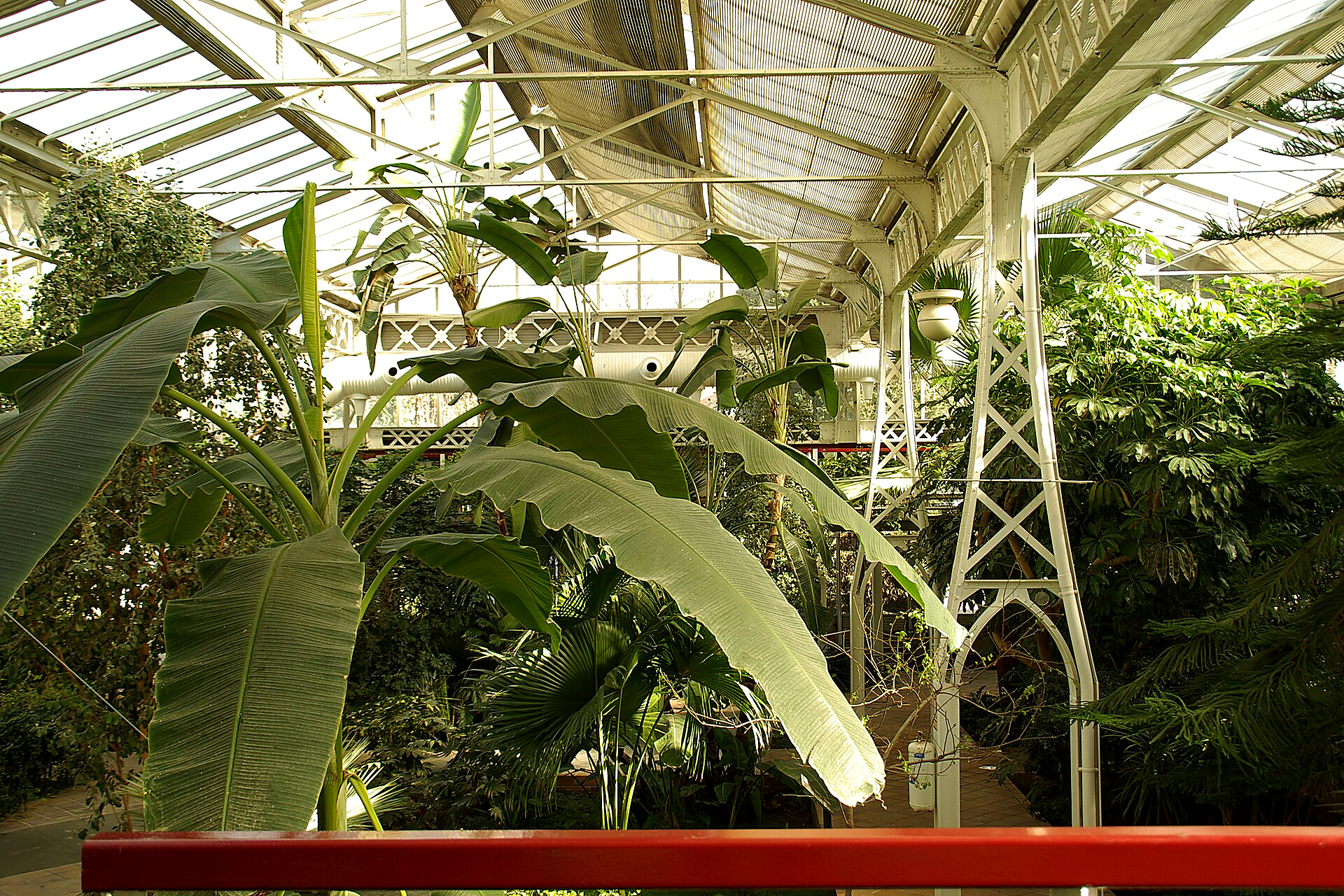
- Two tropical environments, with high humidity and lush vegetation, where you can see palm trees, climbing plants, epiphytes, shrubs and species typical of humid forests.
- Subtropical area, home to species adapted to warm climates but with greater seasonal variation than strictly tropical regions.
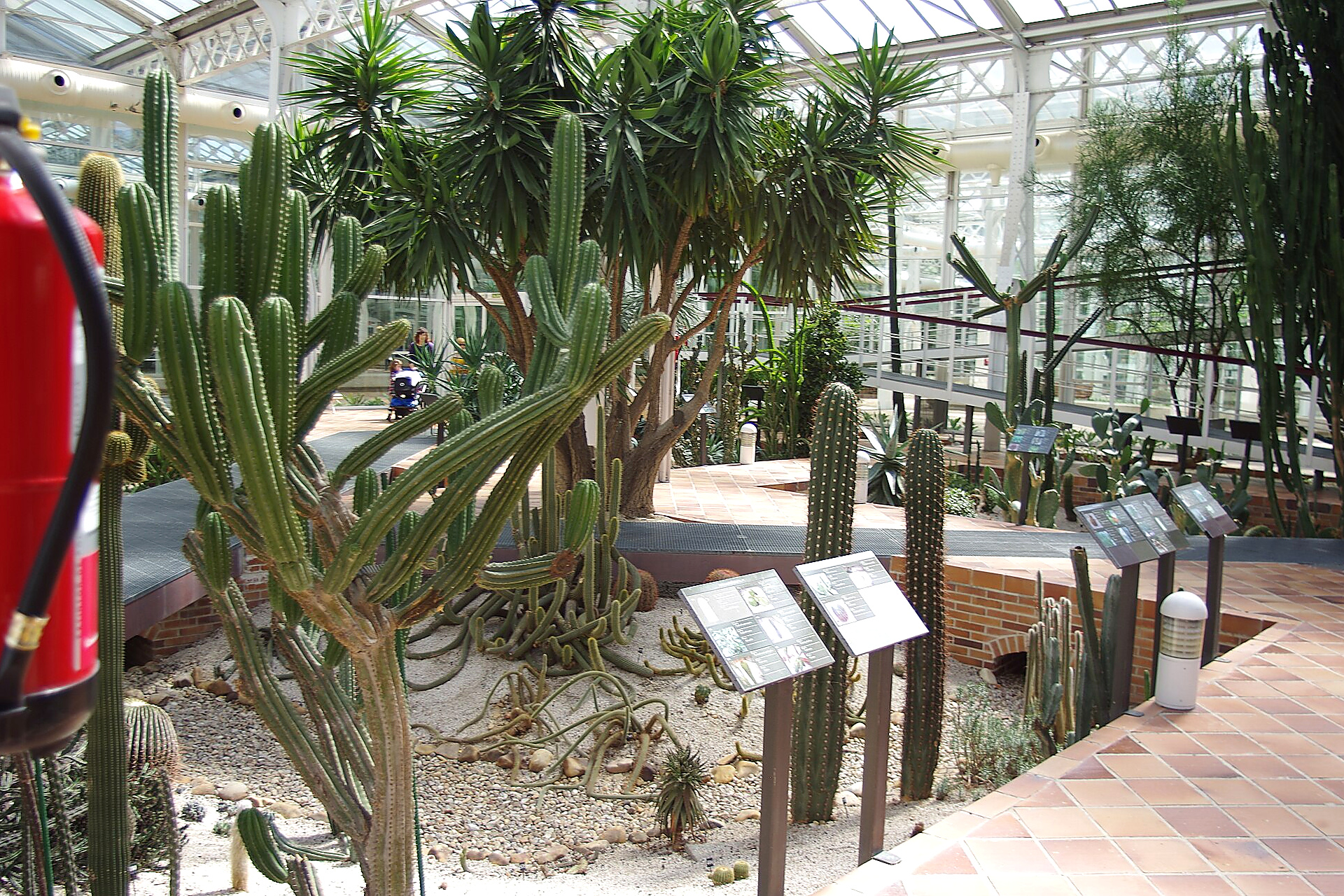
- Desert area, probably one of the most striking, with cacti, agaves, aloes, euphorbias and numerous succulent plants adapted to survive in extremely dry environments.
- Central crossing, a large glazed space providing access to the different areas of the greenhouse.
- Ponds, fountains and small channels, which help regulate the environment and turn some corners into especially pleasant places for walking and photography.
- Aquariums and small aquatic environments, integrated into some sections of the route.
How many plants does it contain?
The botanical collection is far larger than it may appear from the outside. The municipal greenhouse guide lists approximately 750 species belonging to more than 400 genera and around 70 botanical families.
Beyond learning their names, one of the most interesting aspects is observing how plants change their shape depending on the conditions in which they have to survive: enormous leaves in humid environments, climbing plants reaching for the light, or thick stems and spines in species from desert regions.
How much does it cost to visit the Arganzuela Greenhouse?
Admission to the Arganzuela Crystal Palace is free, making it a particularly appealing way to discover a different side of Madrid without spending anything.
The site is municipally owned, and Madrid City Council also organises certain activities and guided visits related to plants, ecosystems and the history of the building.
What are the opening hours?
Opening hours vary depending on the time of year. During the winter period, it currently opens Tuesday to Friday from 9:30 to 14:00 and on Saturdays, Sundays and public holidays from 10:00 to 14:00. During the summer season, it also usually opens in the afternoon, generally from 18:00 to 21:00.
Opening hours may change and some activities have their own schedules, so it is advisable to check the official Madrid City Council information before travelling.
How much time do we need to visit it?
There is no need to set aside an entire day. A relaxed visit can be completed in approximately 45 minutes to one hour, although photography and botany enthusiasts will probably want to spend longer observing the different species.
Ideally, the greenhouse should be included as part of a broader route through Madrid Río and Matadero Madrid, making it one of the stops on a several-hour walk through this part of the city.
Is it worth visiting?
Yes, especially if you already know Madrid’s most famous sights. It does not have the monumentality of the Crystal Palace in El Retiro, but it offers something completely different: the chance to enter a large industrial structure of iron and glass and walk successively through tropical vegetation, subtropical plants and desert landscapes.
It also remains much less well known than other green spaces and monuments in Madrid, making it especially interesting for visitors looking to discover something different in the city.
What else can we see nearby?
- Madrid Río, the large linear park built alongside the Manzanares River, perfect for walking or cycling.
- Matadero Madrid, a former industrial complex transformed into one of the city’s leading centres for culture and contemporary creation.
- Casa del Reloj, another historic building belonging to the former slaughterhouse and livestock market complex.
- Arganzuela Bridge, one of the most recognisable bridges in Madrid Río thanks to its modern helical structure.
- Arganzuela Park, now integrated into Madrid Río and located next to the greenhouse itself.
In short, the Arganzuela Crystal Palace Greenhouse is one of those corners of Madrid that surprises precisely because many Madrileños do not even know it exists. A former slaughterhouse warehouse transformed into a botanical garden, more than 7,000 square metres of iron and glass, and several plant worlds gathered under one roof make this a different, free and perfect visit to combine with a walk through Madrid Río.
How to get there
Decimal: 40.393611°, -3.700000°
DMS: 40°23'37" N, 3°42'00" O