Alhambra of Granada, an Andalusi palatine city


To share to WhatsApp Status or Instagram, use “More options”.
Updated on
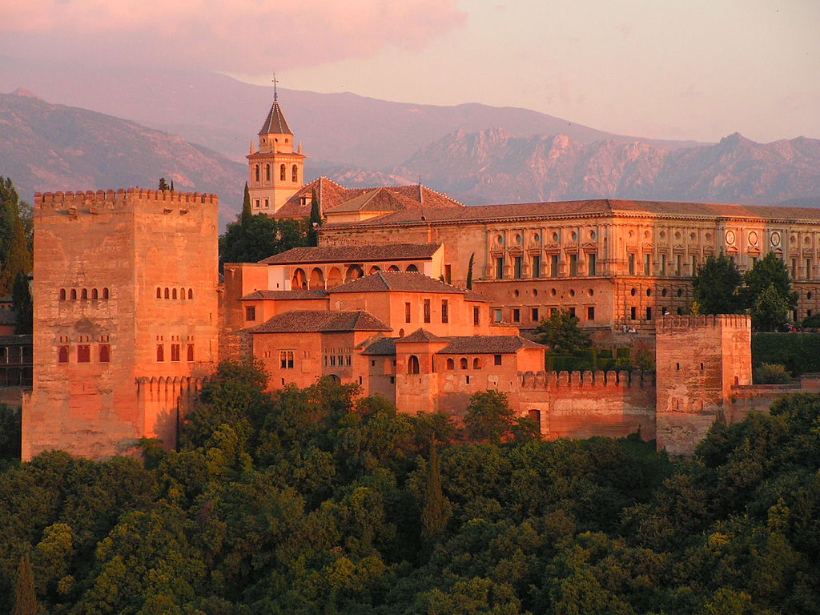
The Alhambra of Granada is an outstanding Andalusi palatine city, fortress and residence of the Nasrid sultans, preserving a complex of palaces, towers, gardens and walls perched on the Sabika hill.
Foundation and Nasrid Era
- 9th century: watchtowers and small structures existed; in 1238 Sultan Muhammad I Al-Ahmar built the new Alcazaba and Nasrid palaces.
- Under Yusuf I (1333–1354) major walls and water cisterns were completed; Muhammad V (1362–1391) erected the famed Comares Palace (now the Court of the Myrtles) and the Palace of the Lions.
- The complex comprised three areas: the Alcazaba (military), the Mexuar and Nazari Palaces (government) and the Generalife (residence and leisure gardens).
Post-1492 Transformations
- After the Christian Conquest in 1492, the Catholic Monarchs commissioned restorations and Mudejar workshops.
- In 1526 Emperor Charles V built his Renaissance palace (now the Alhambra Museum) housing a premier collection of Hispano-Islamic art.
- Napoleon’s army blew up parts of the walls in 1812; following neglect, the site became state-owned in 1868.
- Since 1984 a UNESCO World Heritage site, it is one of Spain’s top tourist attractions.
Ultimately, the Alhambra fuses Islamic and Renaissance art, hydraulic engineering and unique topography, creating a historical palimpsest still marveling visitors with its harmony, stucco and tile ornamentation, and timeless gardens.
How to get there
A la Alhambra se puede acceder en autobús desde el centro de Granada, en coche por la ronda sur y a pie por Plaza Nueva y la Cuesta de Gómerez.
Su dirección es calle Real de la Alhambra, s/n, 18009.
Coordinates:
Decimal: 37.176944°, -3.590000°
DMS: 37°10'37" N, 3°35'24" O
Nearby places to this


Other similar tourist places in Spain


Comments
Be the first to comment on this place